Sealcoating in League City, TX
Build a smoother, stronger surface with professional asphalt paving in League City, TX. From residential driveways and private roads to commercial parking lots and industrial properties, we deliver dependable paving solutions built for durability, proper drainage, heavy traffic, and Texas weather. With careful preparation, quality materials, and attention to every detail, League City Asphalt Paving helps create pavement that looks great and is designed to last.
Professional Asphalt Paving for Driveways, Parking Lots, Roads & Commercial Properties
Asphalt does not stay new forever. Sunlight, heat, rain, vehicle traffic, oxidation, and occasional automotive fluids gradually change the surface from deep black to gray and can make the pavement more vulnerable to deterioration. Professional sealcoating in League City, TX is a preventive-maintenance option designed to protect serviceable asphalt while improving its appearance.
League City Asphalt Paving provides sealcoating solutions for homeowners, businesses, property managers, apartment communities, private facilities, and other property owners who want to maintain existing asphalt. Sealcoating is most useful when it is applied at the right stage of pavement life. It is not a substitute for rebuilding failed pavement, correcting drainage problems, or repairing major structural damage. Instead, it is a protective surface treatment that can become one part of a broader asphalt maintenance plan.
League City presents several pavement-maintenance considerations. Long periods of strong sun and high temperatures can accelerate surface oxidation, while heavy Gulf Coast rain makes crack repair and drainage especially important. A practical maintenance plan should account for both conditions rather than focusing on appearance alone.
Sealcoating in League City, TX
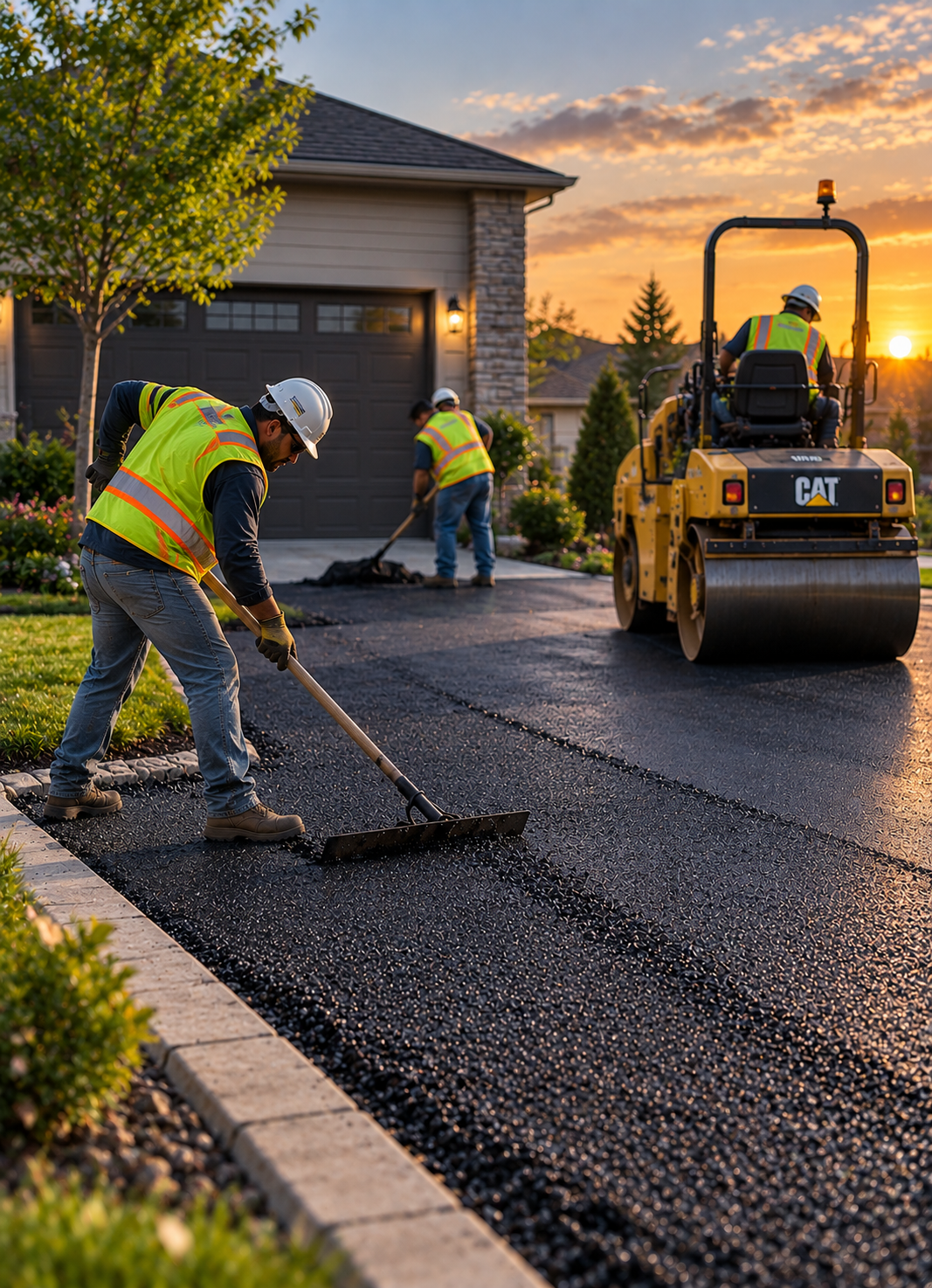
Professional Asphalt Sealcoating in League City
Sealcoating places a formulated protective coating over an existing asphalt surface. Once properly cured, the coating creates a more uniform finish and helps shield the asphalt binder at the surface from weathering and everyday exposure.
Good candidates commonly include asphalt driveways, parking lots, private lanes, apartment parking areas, church lots, office properties, storage facilities, and other paved surfaces that are structurally serviceable but beginning to show normal surface aging.
Before recommending sealcoating, the pavement should be evaluated. A gray surface with minor weathering may be a reasonable candidate. Widespread alligator cracking, deep potholes, unstable areas, major
depressions, or extensive base failure usually indicate that repair, resurfacing, or reconstruction deserves attention first.
That distinction matters. A dark new coating can improve appearance, but it cannot restore structural capacity that has already been lost below the surface.
What Sealcoating Can Do - and What It Cannot Do
Sealcoating is primarily a preservation treatment. Its value comes from protecting pavement that still has useful life remaining. A properly selected and applied coating can help reduce direct exposure of the asphalt surface to ultraviolet light and weather. It can also create a darker, more consistent appearance and provide a refreshed surface for commercial properties that will later receive new pavement markings.
Sealcoating does not level significant low spots, rebuild a weak base, permanently repair potholes, or make severe cracking disappear. Cracks and localized failures generally need separate preparation or repair before coating. If water is ponding because the pavement was graded poorly or has settled, coating the surface will not correct the elevation.
Understanding those limits helps property owners spend maintenance dollars where they will have the greatest effect.
Residential Sealcoating
in League City
A residential driveway experiences repeated vehicle loads, turning movements, sun exposure, rain, lawn irrigation, and edge stresses. Over time, the surface can lose its dark color and begin to show fine cracking.
For a homeowner, sealcoating can be useful when the driveway remains stable and the primary concerns are weathering, minor surface aging, and appearance. Preparation is especially important around garage aprons,
sidewalks, curbs, landscaping, and concrete transitions.
Before coating, oil spots and loose material should be addressed, vegetation should be removed from pavement cracks and edges, and cracks or failed areas should receive appropriate treatment. Applying sealer over dirt, loose aggregate, or unresolved damage can interfere with adhesion and appearance.
Homeowners should also plan for temporary access restrictions while the coating dries and cures. Weather, shade, humidity, product type, and application conditions can affect how quickly a surface is ready for traffic.
Commercial Sealcoating for Parking Lots and Business Properties
Commercial pavement has different demands. A business may need to maintain customer access, coordinate work around operating hours, preserve loading or delivery routes, and restore striping after the surface treatment.
A commercial sealcoating project may be divided into phases so portions of a parking lot remain available.The appropriate plan depends on the lot layout, traffic volume, entrances, tenant needs, and curing requirements.
Commercial properties that may benefit include retail centers, offices, restaurants, medical properties, churches, apartment communities, warehouses, self-storage facilities, and private developments. Areas exposed to frequent heavy-truck turning or leaking fluids may need special attention because those stresses differ from normal passenger-car parking.
For property managers, sealcoating also provides a useful opportunity to inspect the entire lot. Cracks, failed patches, drainage problems, broken edges, trip concerns, and worn markings can be identified before the final maintenance plan is established.
Common Sealcoating Applications
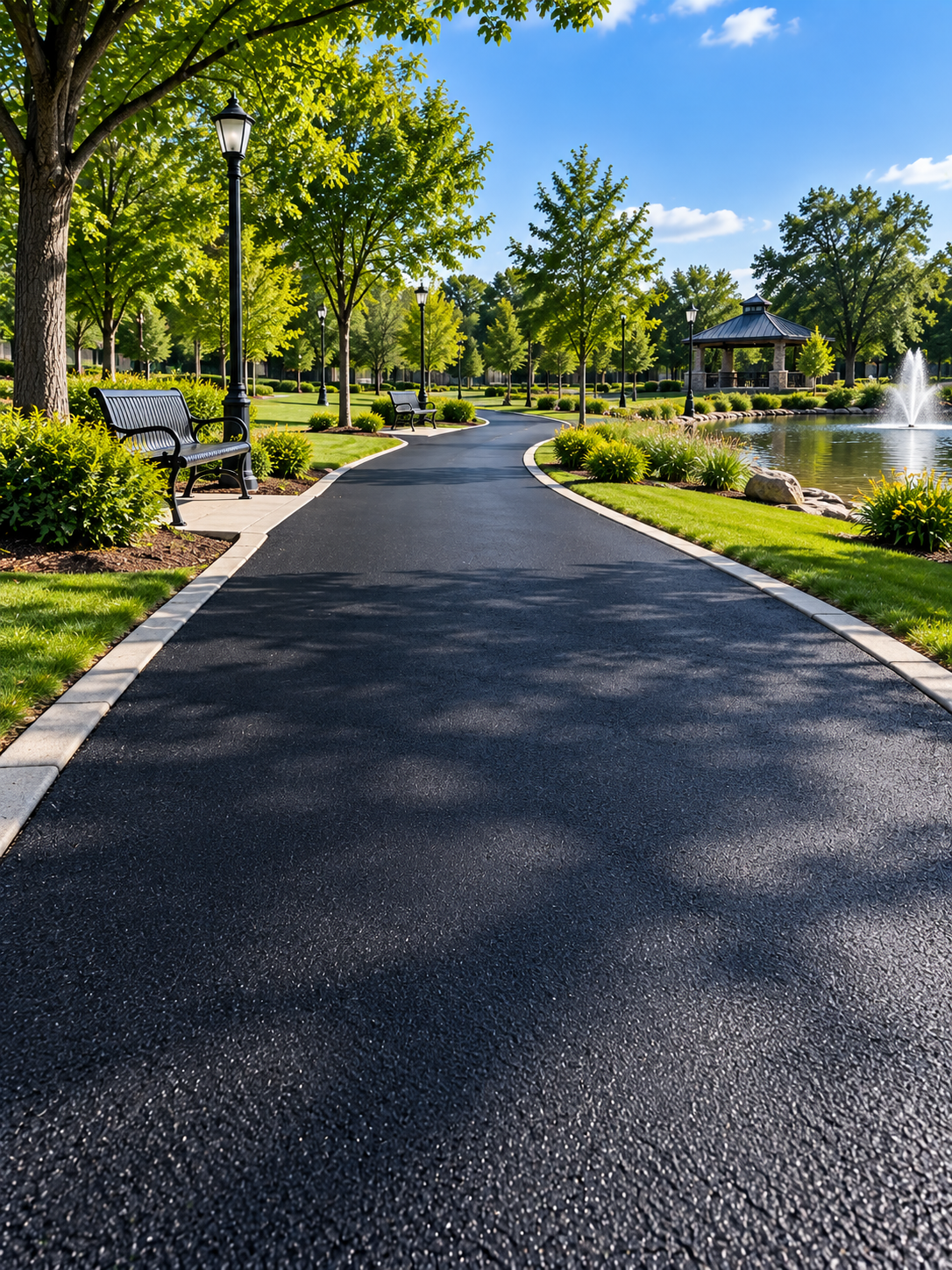
Sealcoating is commonly considered for residential asphalt driveways, small private parking areas, commercial parking lots, apartment and multifamily parking areas, private roads, church and school-related parking surfaces, office complexes, storage properties, and light-industrial paved areas.
The condition of the pavement matters more than the property category. Two lots of the same age can require very different work because of drainage, traffic, construction quality, maintenance history, and exposure.
Sealcoat Materials and Application Considerations
Sealcoating products are generally formulated from asphalt-based emulsions or other pavement-coating systems combined with water, mineral fillers, additives, and sometimes aggregate according to the product and application. Product selection should match the pavement, use, and project requirements.
Uniform application matters. Too little material may provide inadequate coverage; excessive material can create curing and performance problems. Surface temperature, air temperature, humidity, shade, and the possibility of rain also affect scheduling.
Professional preparation may include cleaning the pavement, removing loose debris, treating vegetation, addressing oil-contaminated areas, filling suitable cracks, repairing failed pavement, protecting adjacent surfaces, and planning the application sequence. The finished coating needs adequate time to cure before vehicles return. A contractor should provide
project-specific guidance rather than relying on a universal reopening time.
Why Professional Sealcoating Matters
Sealcoating looks straightforward, but successful results depend heavily on preparation, product handling, application rate, weather, and timing. Coating damp pavement, ignoring contamination, sealing over structural failures, or reopening too early can undermine the project.
An experienced asphalt contractor can also help answer the more important question: should the pavement be sealcoated at all? Sometimes crack repair and coating are appropriate. Sometimes patching is needed first. In other cases, resurfacing or reconstruction may be a better use of the property owner's budget.
That evaluation is one of the strongest reasons to avoid choosing a maintenance treatment based only on the
lowest quoted price.
Benefits of Sealcoating
Helps Protect Against Surface Oxidation
Asphalt binder changes as it ages and is exposed to oxygen and sunlight. The surface often becomes lighter, drier, and more brittle over time. A protective coating reduces direct environmental exposure at the pavement surface and is commonly used as part of preventive maintenance.
Refreshes Faded Asphalt
Weathered asphalt can make an otherwise well-maintained property look tired. Sealcoating restores a dark, uniform finish that can improve curb appeal for a home and create a cleaner presentation for a commercial property.
Supports a Broader Maintenance Program
Crack treatment, localized patching, sealcoating, drainage attention, and periodic evaluation can work together as a pavement-preservation strategy. The right combination depends on pavement age and
condition.
Creates a Better Visual Background for Striping
On commercial lots, a freshly sealed surface can provide a crisp background for new parking-space lines, arrows, accessible markings, fire-lane markings, and other traffic-control paint after the coating has cured sufficiently.
Can Be More Practical Than Waiting for Major Deterioration
Preventive maintenance is generally intended to address pavement before extensive failure develops. Waiting until potholes, base movement, and widespread cracking dominate the surface can narrow the available
maintenance options
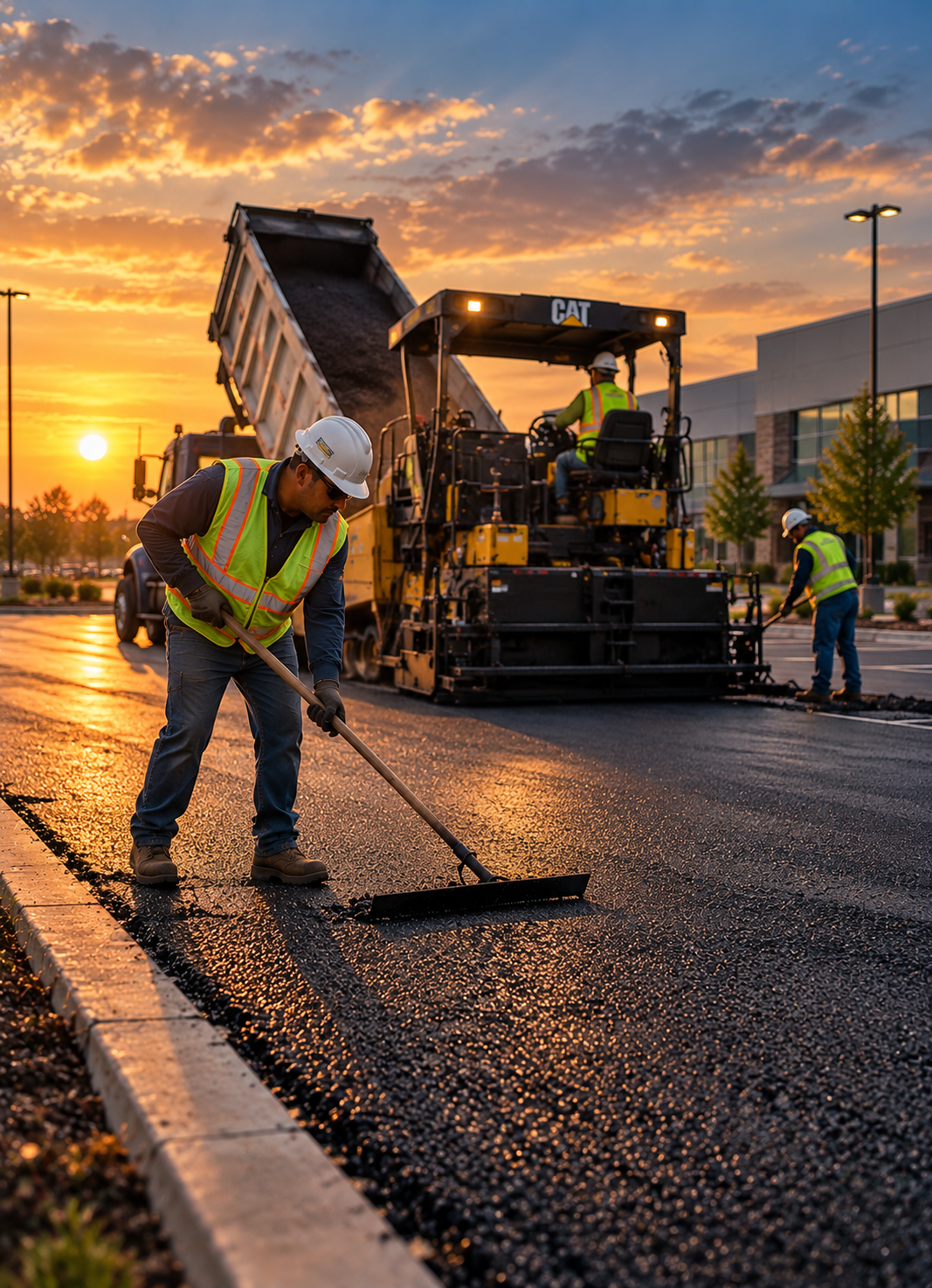
A Typical Professional
Sealcoating Process
1. Pavement Evaluation
The first step is determining whether sealcoating is appropriate. The contractor reviews cracking, potholes, drainage, surface wear, previous coatings, oil contamination, edges, traffic patterns, and structural concerns.
2. Cleaning and Surface Preparation
Loose dirt, sand, leaves, grass, and other contaminants are removed. Proper adhesion depends on coating the pavement rather than coating debris.
3. Crack and Repair Work
Suitable cracks may be cleaned and treated. Potholes and structurally failed areas should be repaired separately. Large defects should not simply be hidden under sealer.
4. Protecting Adjacent Areas
Concrete, curbs, walls, garage doors, landscaping, drainage structures, and other surfaces may need protection so the coating remains where it belongs.
5. Sealcoat Application
The selected material is applied using a method appropriate for the project. Larger commercial lots and smaller residential driveways may use different equipment and application strategies.
6. Curing and Traffic Control
The area remains closed while the coating cures. Commercial sites may require cones, barricades, phased closures, or other traffic-control planning.
7. Striping When Applicable
Parking lot markings can be restored after the surface is ready for paint and traffic.
Choosing a Sealcoating Contractor in League City, TX
Ask a prospective contractor how the pavement will be prepared, what repairs should occur first, what type of coating is proposed, how weather affects scheduling, how long traffic should remain off the surface, and how
adjacent concrete or property features will be protected.
For a commercial lot, also discuss phasing, access, striping, loading zones, tenant communication, and how traffic will be controlled. A clear scope makes estimates easier to compare.
Be cautious of proposals that treat every pavement problem as cosmetic. Sealcoating should be recommended because it fits the condition of the asphalt, not simply because the surface can be made black
again.
Sealcoating and League City Weather
League City pavement is exposed to strong sun, high summer temperatures, humid conditions, and periods of intense rainfall. Local drainage deserves particular attention because standing water and water entering cracks can contribute to pavement deterioration.
The city also includes low-lying areas and floodplain considerations, so paving and grading work may be subject to site-specific drainage or permitting requirements. Property owners planning substantial pavement changes should confirm applicable local requirements rather than assuming maintenance and reconstruction are treated the same way.
For sealcoating itself, a dry weather window is important. The surface should be properly prepared and sufficiently dry, and the coating needs time to cure before rainfall or traffic interferes with it.
Why Choose League City
Asphalt Paving
League City Asphalt Paving focuses on practical asphalt solutions for local residential and commercial
properties. For sealcoating, that means looking beyond appearance and considering the actual condition of
the pavement.
We can help property owners evaluate whether maintenance, crack treatment, patching, resurfacing, or
another paving service makes sense before a coating is applied. That approach helps keep the scope aligned
with the pavement's needs.
Our website also covers related services including residential paving, commercial paving, asphalt resurfacing,
driveway paving, and parking lot paving, making it easier to consider the full range of options for an aging
asphalt surface.
Why Choose League City Asphalt Paving
League City Asphalt Paving provides commercial asphalt solutions for properties that need new construction, replacement, resurfacing, repair, or ongoing pavement maintenance.
We focus on practical project considerations: foundation support, grading, drainage, traffic, access, asphalt placement, compaction, and clean transitions. We can also discuss related services such as parking lot paving, sealcoating, and resurfacing so property owners can compare alternatives.
No two commercial sites operate exactly the same way. Our goal is to help develop a scope that reflects the condition and use of the property.
Frequently Asked Questions
About Sealcoating
How do I know if my asphalt needs sealcoating
Fading from black to gray, surface weathering, and minor aging on otherwise stable pavement are common reasons to consider sealcoating. If the pavement has major potholes, widespread interconnected cracking, deep depressions, or base failure, repairs or resurfacing may be more appropriate first.
Will sealcoating fix cracks?
No. Sealcoating is not a structural crack repair. Appropriate cracks should generally be treated separately before coating. Large or movement-related cracks may indicate deeper problems that need evaluation.
Can you sealcoat over potholes?
Potholes should be repaired before sealcoating. Coating over a pothole may change its color but does not rebuild the failed pavement.
How long should vehicles stay off newly sealcoated asphalt?
Cure time depends on the product, weather, application, shade, humidity, and site conditions. Follow the contractor's project-specific reopening instructions rather than assuming a fixed time.
Is sealcoating only for appearance?
No. Appearance is one benefit, but sealcoating is primarily used as a surface-preservation treatment. It helps shield serviceable asphalt from weathering and environmental exposure.
Can a commercial parking lot stay open during sealcoating?
Often a project can be phased, depending on the property layout. Sections can sometimes be closed and reopened in sequence so customers, tenants, or employees retain some access.
Should cracks be filled before sealcoating?
Many suitable cracks should be cleaned and treated before coating. The correct repair depends on crack type, width, movement, and the condition of the surrounding pavement.
Does sealcoating correct drainage problems?
No. Standing water caused by poor grades, settlement, or drainage-system problems requires a separate solution. Sealcoating does not change pavement elevations.
How often should asphalt be sealcoated?
There is no universal interval that fits every property. Traffic, sun exposure, drainage, pavement age, prior maintenance, coating condition, and product type all matter. Periodic inspection is more useful than following a rigid calendar.
Request a Sealcoating Estimate
in League City
If your asphalt is fading, weathering, or due for preventive maintenance, contact League City Asphalt Paving to discuss sealcoating in League City, TX. We can help evaluate the surface, identify repairs that should be addressed first, and discuss a maintenance approach appropriate for your driveway, parking lot, or other asphalt property.
Our services include:
Asphalt paving • Asphalt driveways • Commercial parking lots • Asphalt repair • Pothole repair • Asphalt patching • Asphalt resurfacing • Asphalt overlays • Sealcoating • Crack repair • Parking lot striping • Private road paving • Pavement maintenance
A successful asphalt project begins with understanding the property.
Instead of guessing whether you need repair, resurfacing, or complete replacement, have the pavement evaluated and determine which solution makes sense for its current condition and intended use.
Get an Asphalt Paving Estimate in League City, TX
Choose a paving company that understands that quality pavement starts long before the final asphalt surface is installed.
From preparation and grading to paving, compaction, repairs, and preventative maintenance, League City Asphalt Paving is committed to helping local property owners create smooth, durable, attractive pavement.
Whether you're improving your home's driveway or planning a large commercial parking lot project, we're ready to discuss your paving needs.
Contact League City Asphalt Paving today to request an estimate for asphalt paving in League City, TX.
League City Asphalt Paving
Professional Asphalt Paving for Residential & Commercial Properties
New Asphalt Paving | Driveways | Parking Lots | Repairs | Resurfacing | Sealcoating | Striping
Request Your Asphalt Paving Estimate Today
leaguecityasphaltpaving
2001 Central Cir
Suite 301
McKinney, TX 75069
(972) 299-3797
info@leaguecityasphaltpaving.com