Asphalt Paving Sugar Land, TX
Build a smoother, stronger surface with professional asphalt paving in League City, TX. From residential driveways and private roads to commercial parking lots and industrial properties, we deliver dependable paving solutions built for durability, proper drainage, heavy traffic, and Texas weather. With careful preparation, quality materials, and attention to every detail, League City Asphalt Paving helps create pavement that looks great and is designed to last.
Professional Asphalt Paving for Driveways, Parking Lots, Roads & Commercial Properties
Commercial pavement is working infrastructure. Customers drive across it, employees park on it, delivery trucks load on it, pedestrians cross it, and stormwater must move across or away from it without creating unnecessary problems. A commercial asphalt project therefore needs to be planned around operations as well as appearance.
League City Asphalt Paving provides commercial paving in League City, TX for businesses, property owners, managers, associations, institutions, and private developments. Projects may include new asphalt parking areas, replacement paving, access drives, service lanes, industrial pavement, private roads, expansions, repairs, and resurfacing.
League City continues to grow as a residential and commercial community, with local planning focused on future development, infrastructure, mobility, and drainage. For property owners, that growth increases the importance of functional pavement that can support daily traffic and contribute to a professional first impression.
Commercial Paving in League City, TX
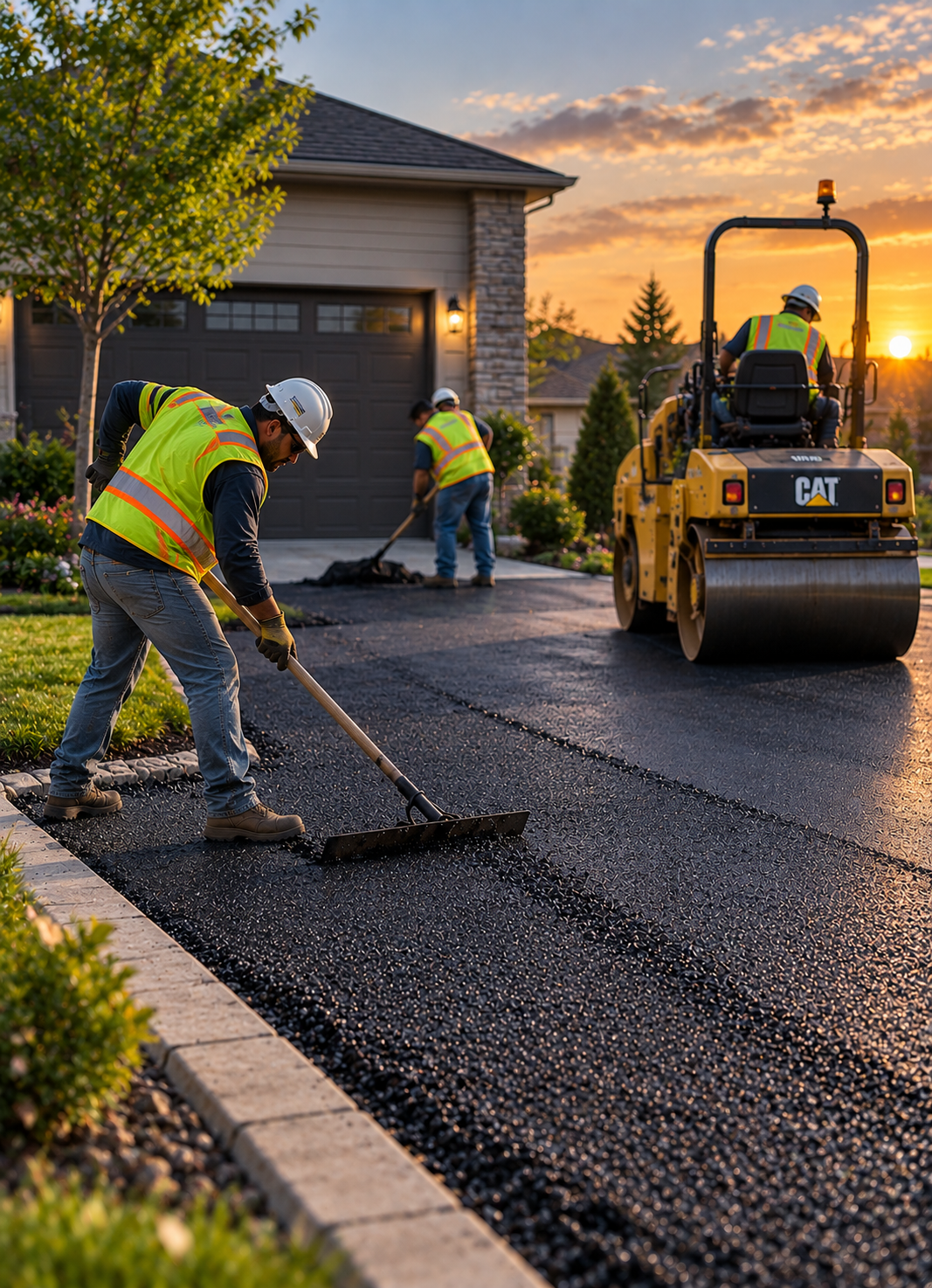
Commercial Asphalt Paving Services in League City
Commercial paving begins with understanding how a site functions. A small professional office with passenger vehicles has different pavement demands than a warehouse with frequent delivery trucks.
A restaurant may have concentrated drive-through traffic. An apartment community needs dependable resident access. A retail property may need construction phasing that keeps businesses reachable.
The pavement design and construction approach should reflect those differences. Commercial services can include new parking lot construction, pavement replacement, parking lot expansions, access roads, drive aisles, loading-area paving, private roadway paving, asphalt overlays, localized reconstruction, patching, and maintenance planning.
The Business Case for Well-Planned Pavement
A parking lot or access road is often one of the first physical parts of a property a visitor experiences. Smooth pavement, logical traffic flow, visible markings, and controlled drainage can support a well-maintained image.
Function matters just as much. Potholes can create rough driving conditions and trip concerns. Standing water can interfere with parking and accelerate deterioration. Broken edges can reduce usable pavement. Failed areas around loading zones can disrupt operations.
Good paving also supports future maintenance. Asphalt surfaces can often be patched, crack-treated, sealcoated, restriped, or resurfaced as they age. A pavement-management mindset can help owners address deterioration in stages rather than waiting until the entire lot requires major reconstruction.
Commercial Properties We Can Discuss
Asphalt is used across many property types, including retail centers, office buildings, medical properties, restaurants, churches, schools and institutional facilities, apartment and multifamily communities, warehouses, self-storage facilities, industrial properties, private developments, contractor yards, and mixed-use sites.
Each has different traffic patterns and operational priorities. The project scope should account for those conditions rather than relying on a generic parking-lot specification.
Parking Lots, Access Drives, and Heavy-Traffic Areas
Parking stalls usually experience lower loads than areas used by delivery trucks, garbage trucks, buses, or other heavy vehicles. Entrances, loading zones, dumpster approaches, drive-through lanes, and tight turning
areas can experience repeated stress.
A commercial paving plan may therefore require different pavement considerations in different parts of the. same property.
Drainage is equally important. Surface grades, curbs, inlets, ditches, swales, neighboring properties, building elevations, and existing stormwater systems all influence how a lot should be shaped.
League City's relatively flat terrain and exposure to heavy rain make these details especially relevant.
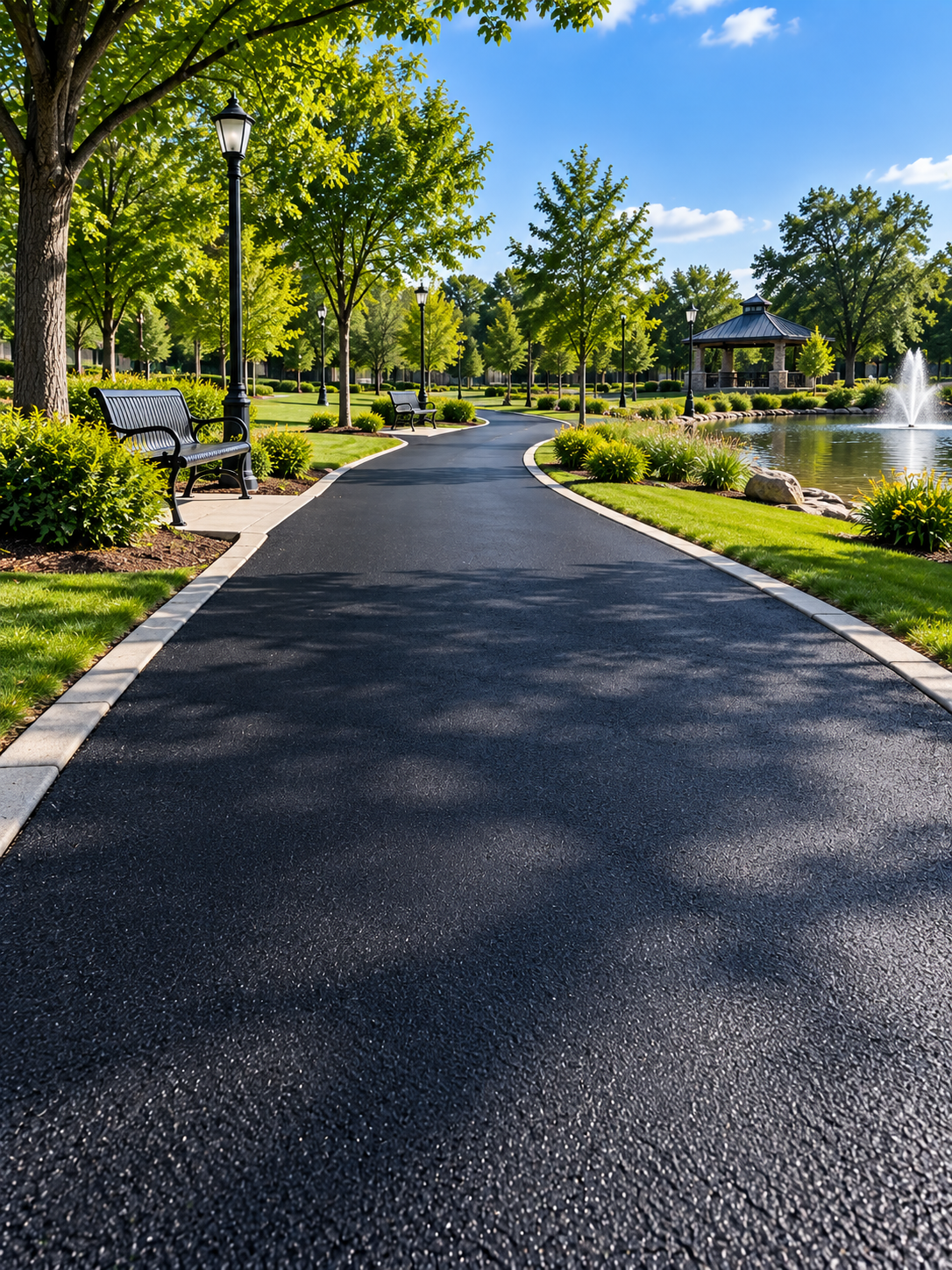
New Commercial Asphalt Construction
A new commercial pavement project generally starts before the first asphalt truck arrives. The site must be prepared to the required elevations. Unsuitable or unstable areas need to be addressed. The subgrade and aggregate base must provide appropriate support. Drainage features should be coordinated
with the paving grades. Utilities, curbs, sidewalks, loading areas, and building entrances all create fixed elevations that the pavement needs to meet.
After the foundation is ready, asphalt is placed and compacted in accordance with the project requirements. Joints, edges, tie-ins, and transitions are completed. Striping and markings are added when the surface is ready.
For larger developments, engineered plans and local permitting requirements may govern parts of the work. Paving within a floodplain can also trigger League City development requirements, so owners should confirm what applies to their site.
Commercial Pavement Replacement
Replacement becomes relevant when a lot has widespread structural distress rather than isolated surface problems.
Signs can include interconnected cracking, recurring potholes, deep wheel-path depressions, extensive settlement, unstable patches, severe edge failure, and drainage problems tied to pavement movement.
Replacement allows failed asphalt to be removed and underlying problems to be investigated. Weak base or
subgrade areas can be corrected before new pavement is installed.
This is more disruptive than surface maintenance, but repeatedly patching a structurally failed lot can become
costly and operationally frustrating.
Asphalt Resurfacing for Commercial Properties
Resurfacing, or overlay paving, can be an efficient option when the existing pavement structure is still reasonably stable but the surface has aged or deteriorated.
Preparation may include repairs, milling, leveling, cleaning, and correcting localized failures before a new asphalt layer is placed. Milling can help manage elevations around curbs, gutters, doors, drains, sidewalks, and adjoining pavement.
Resurfacing is not appropriate for every lot. If major base failures or drainage problems remain, the new surface can inherit those weaknesses.
An evaluation should determine whether the property is a good candidate.
Commercial Paving Benefits
Durable, Versatile Surface
Asphalt can be designed for a wide range of commercial traffic conditions and property layouts.
Smooth Traffic Movement
A well-constructed surface supports comfortable vehicle movement and creates clearer routes through a property.
Maintainability
Commercial asphalt can often be maintained through crack repair, patching, sealcoating, resurfacing, and restriping over its service life.
Professional Appearance
Fresh pavement and clear markings can improve the visual presentation of a business or managed property.
Phased Construction Options
Depending on site layout and project type, work can sometimes be staged to preserve access to portions of a property.
Adaptability
As properties change, asphalt areas can often be expanded, reconfigured, patched, or tied into new construction.
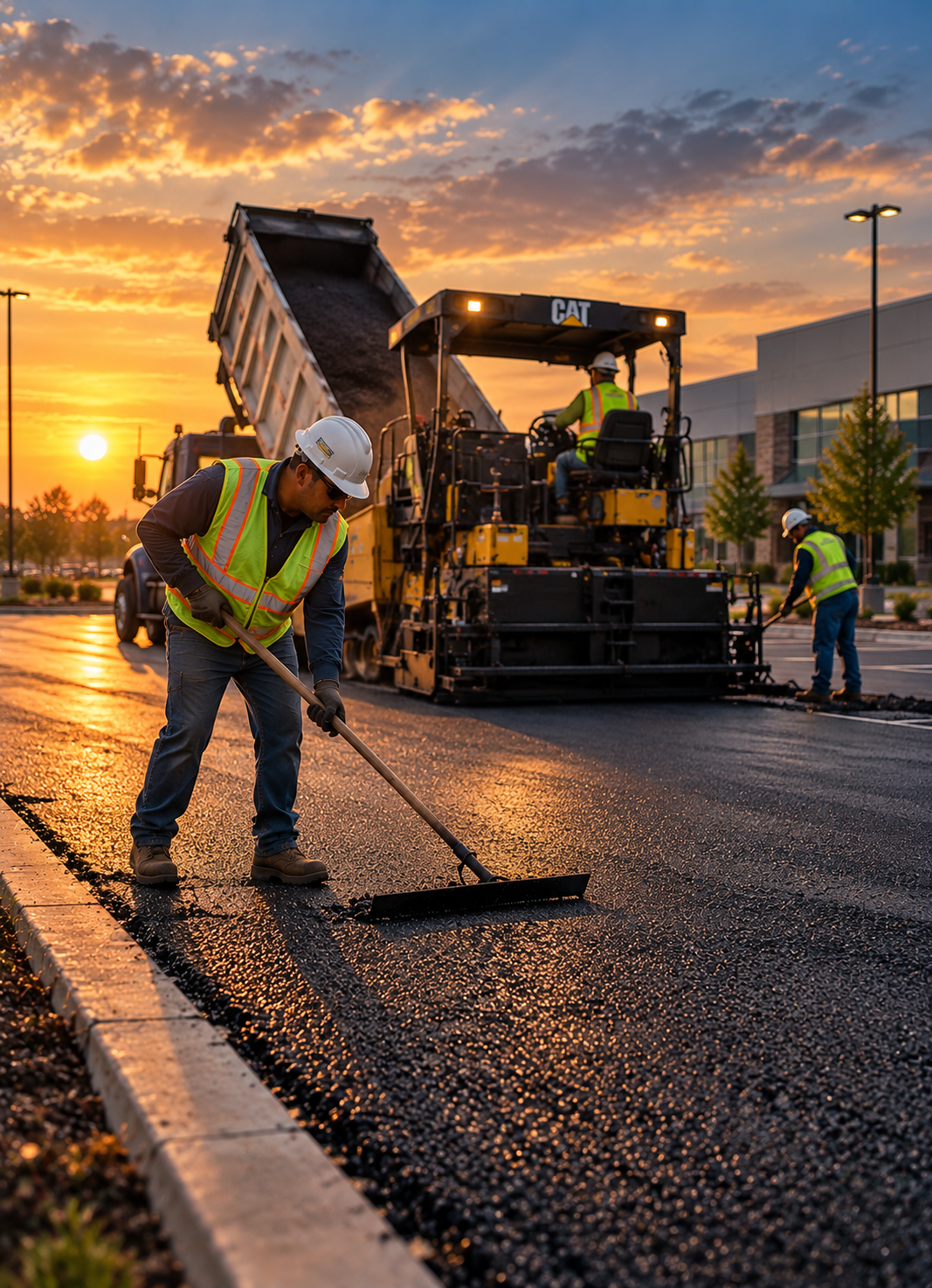
A Typical Commercial Paving Process
Site and Operations Review
The contractor reviews pavement condition, traffic, truck routes, entrances, loading zones, drainage, fixed elevations, utilities, business hours, and access requirements.
Scope Development
The project is divided into appropriate work: removal, excavation, repairs, base construction, milling, paving, striping, or maintenance.
Traffic and Phasing Plan
For occupied properties, the sequence should consider customer access, employee parking, deliveries, emergency access, tenant needs, and safe separation from construction areas.
Subgrade and Base Work
Failed material is removed or corrected as needed. Aggregate base is installed and compacted where required.
Grading and Drainage
Elevations are established so water moves toward the intended drainage system and the new pavement ties into curbs, structures, and existing surfaces.
Asphalt Placement and Compaction
The mix is placed at the specified depth and compacted while it remains within the proper working temperature range.
Finish Details and Striping
Edges, joints, transitions, utility structures, and tie-ins are completed. Parking-space and traffic markings are installed after the pavement is ready.
Drainage and Stormwater in League City
Commercial pavement creates impervious surface, so drainage should be considered from the beginning of a project. League City's own planning documents emphasize that the city's low elevation and limited natural
slope can make stormwater management challenging.
On a commercial property, drainage can involve sheet flow across pavement, curb and gutter, inlets, detention systems, ditches, swales, or other site-specific features. Paving should work with the approved drainage plan
rather than obstruct it.
Standing water is not merely unattractive. It can interfere with pedestrians and vehicles, enter pavement cracks, soften unsupported areas, and reveal grading or settlement problems.
Because local rules can apply to paving and grading, particularly in floodplain areas, property owners should coordinate with the appropriate professionals and local authorities when permits or engineered plans are
required.
Why Professional Commercial Installation Matters
Commercial paving has little room for shortcuts. A weak base may not show immediately,
but repeated traffic can expose it. Incorrect elevations can create ponding. Poor transitions can create bumps at entrances. Inadequate compaction can reduce pavement stability.
Operational planning is another professional advantage. A contractor must think about how trucks enter, where equipment stages, how asphalt deliveries move through the property, and how the work area stays separated from normal business activity.
The lowest bid can be expensive if it excludes necessary preparation or creates repeated repair costs. Owners should compare the entire scope and expected pavement use.
Choosing a Commercial Paving Contractor in League City
Ask prospective contractors to explain how they evaluated the existing pavement and what assumptions are
included in the estimate. Clarify removal depths, base work, drainage, milling, asphalt placement, traffic
control, striping, cleanup, and any exclusions.
For occupied properties, ask how the project will be phased and what areas must close. For heavy-use
properties, discuss truck traffic and loading zones specifically.
If plans or specifications have been prepared by an engineer, estimates should follow those documents. If the
project is design-build or maintenance-oriented, the contractor should clearly explain the proposed approach.
Why Choose League City Asphalt Paving
League City Asphalt Paving provides commercial asphalt solutions for properties that need new construction, replacement, resurfacing, repair, or ongoing pavement maintenance.
We focus on practical project considerations: foundation support, grading, drainage, traffic, access, asphalt placement, compaction, and clean transitions. We can also discuss related services such as parking lot paving, sealcoating, and resurfacing so property owners can compare alternatives.
No two commercial sites operate exactly the same way. Our goal is to help develop a scope that reflects the condition and use of the property.
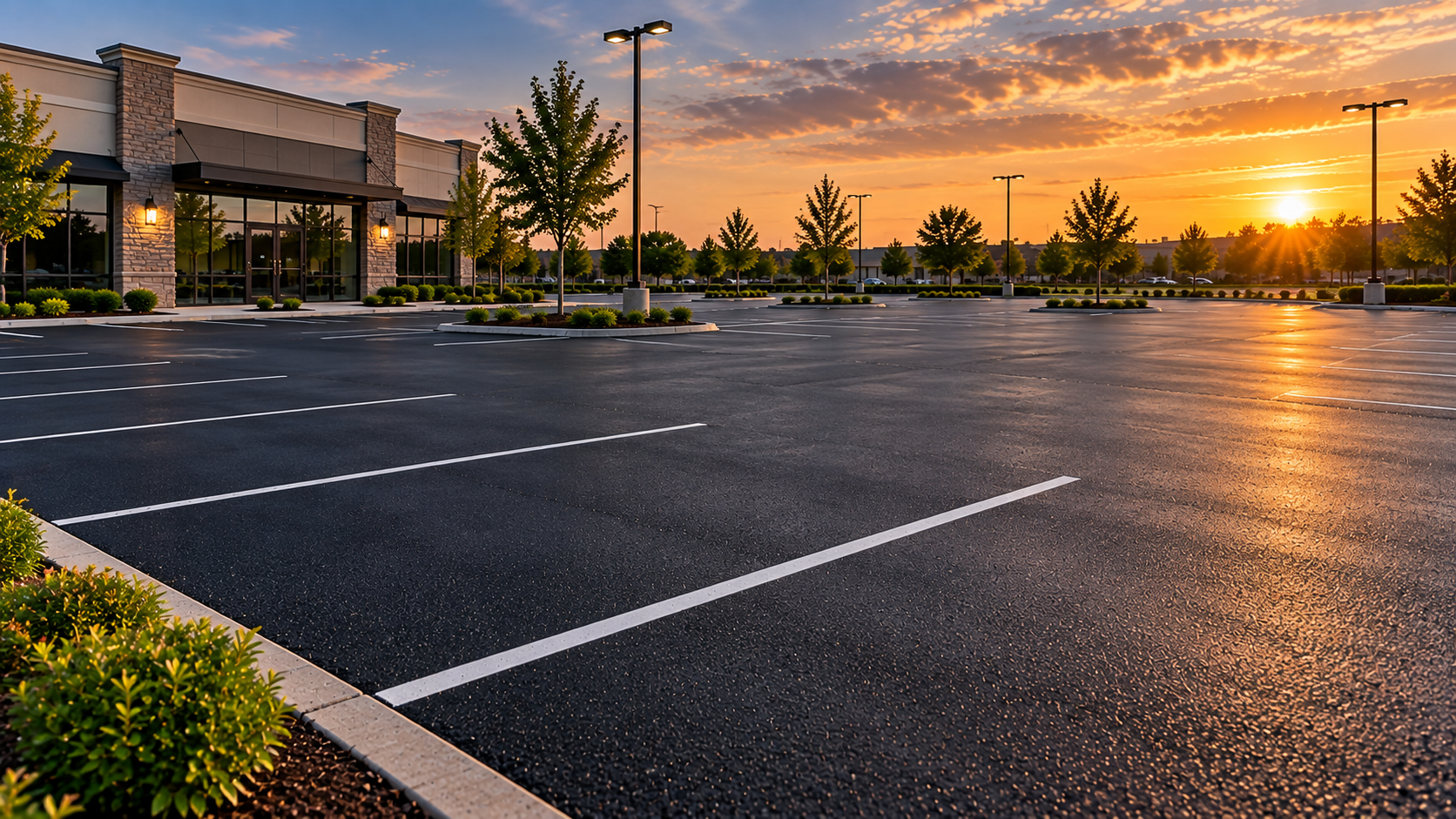
Frequently Asked Questions About Commercial Paving
How is commercial asphalt different from a residential driveway?
Commercial pavement often carries more vehicles, heavier loads, frequent turning movements, and concentrated traffic at entrances or loading areas. It may also require more complex drainage, phasing, striping, and access planning.
Can a business stay open during paving?
Sometimes. Many projects can be phased, but feasibility depends on entrances, lot layout, safety, curing, and the work being performed. A phasing plan should be discussed before construction.
What causes commercial parking lots to fail?
Common contributors include weak subgrade or base, inadequate drainage, water infiltration, heavy traffic, poor compaction, aging, utility cuts, and delayed maintenance.
Should an old parking lot be resurfaced or replaced?
Cracking can result from age, water intrusion, foundation movement, inadequate drainage, traffic loads, oxidation, or structural deterioration. The crack pattern and surrounding pavement condition can help identify the appropriate repair approach.
Why is milling used before an asphalt overlay?
Milling removes a controlled depth of existing pavement. It can help restore elevations, remove deteriorated material, improve transitions, and create space for a new asphalt layer without raising the finished surface excessively.
Does a commercial paving project need permits?
Requirements depend on the project and site. New construction, grading, drainage changes, floodplain work, or other development activities may require city review or permits. Property owners should verify requirements for their specific project.
Can heavy-truck areas be designed differently from parking stalls?
Yes. Pavement design should account for expected loads and traffic repetitions. Loading areas, dumpster approaches, and truck routes may require different structural considerations.
When should a parking lot be sealcoated?
Sealcoating is generally considered for structurally serviceable asphalt showing normal surface aging. Major repairs should be completed first. Timing depends on pavement condition and maintenance history.
What should be included in a commercial paving estimate?
A useful estimate should define the work area, removal or milling, base repairs, grading, asphalt placement, compaction, transitions, traffic control, striping if included, and major exclusions.
Request a Commercial Paving Estimate in League City
If your business, development, apartment community, industrial site, or managed property needs new asphalt or major pavement improvements, contact League City Asphalt Paving. We can discuss commercial paving in
League City, TX, evaluate the site, and help identify an appropriate path for construction, resurfacing, repair, or maintenance.
Our services include:
Asphalt paving • Asphalt driveways • Commercial parking lots • Asphalt repair • Pothole repair • Asphalt patching • Asphalt resurfacing • Asphalt overlays • Sealcoating • Crack repair • Parking lot striping • Private road paving • Pavement maintenance
A successful asphalt project begins with understanding the property.
Instead of guessing whether you need repair, resurfacing, or complete replacement, have the pavement evaluated and determine which solution makes sense for its current condition and intended use.
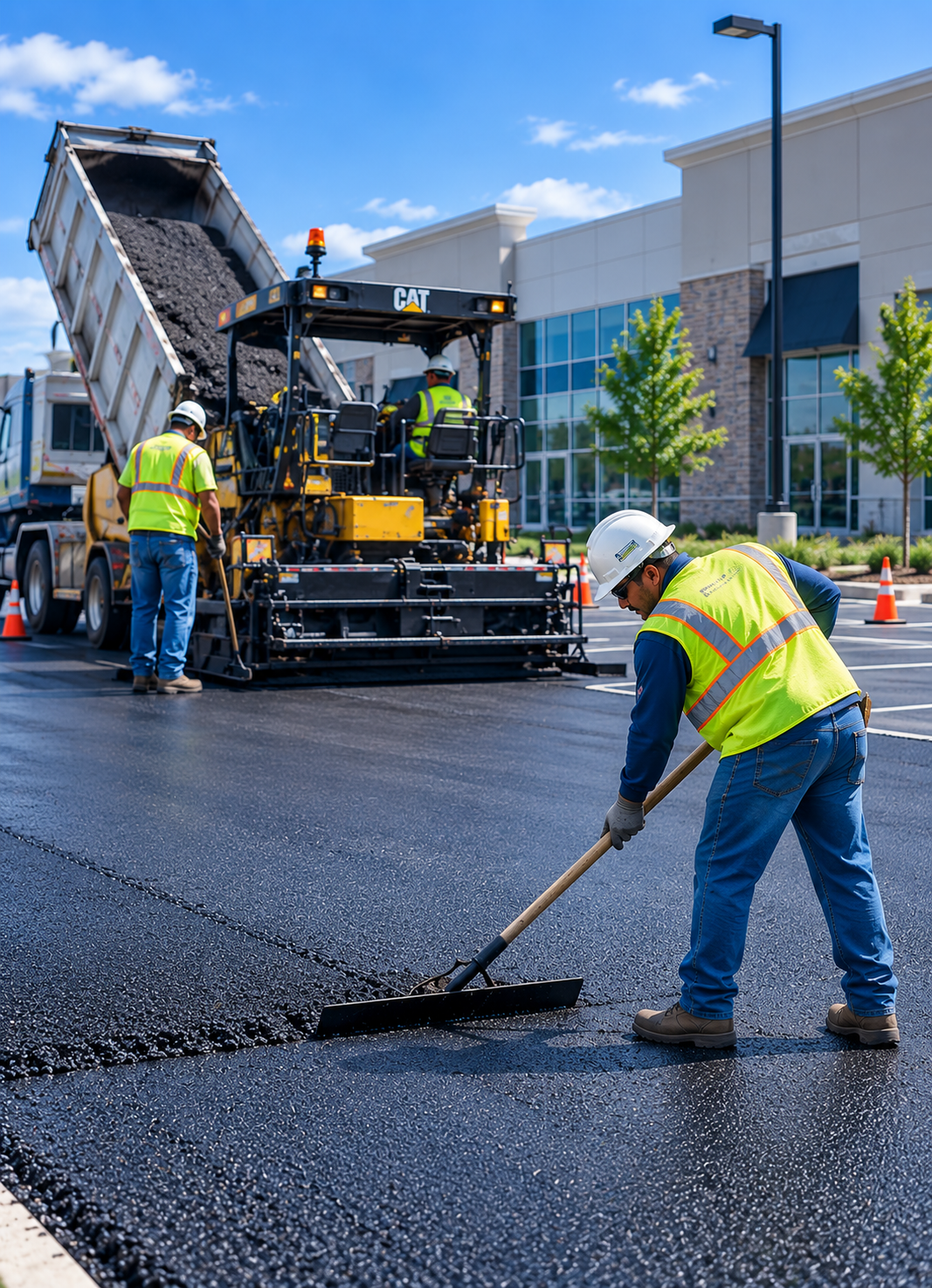
Get an Asphalt Paving Estimate in League City, TX
Choose a paving company that understands that quality pavement starts long before the final asphalt surface is installed.
From preparation and grading to paving, compaction, repairs, and preventative maintenance, League City Asphalt Paving is committed to helping local property owners create smooth, durable, attractive pavement.
Whether you're improving your home's driveway or planning a large commercial parking lot project, we're ready to discuss your paving needs.
Contact League City Asphalt Paving today to request an estimate for asphalt paving in League City, TX.
League City Asphalt Paving
Professional Asphalt Paving for Residential & Commercial Properties
New Asphalt Paving | Driveways | Parking Lots | Repairs | Resurfacing | Sealcoating | Striping
Request Your Asphalt Paving Estimate Today
leaguecityasphaltpaving
2001 Central Cir
Suite 301
McKinney, TX 75069
(972) 299-3797
info@leaguecityasphaltpaving.com